Pysu Leaked ER footage of Charlie Kirk’s final moments sparks outrage and unanswered questions
Leaked ER footage of Charlie Kirk’s final moments sparks outrage and unanswered questions
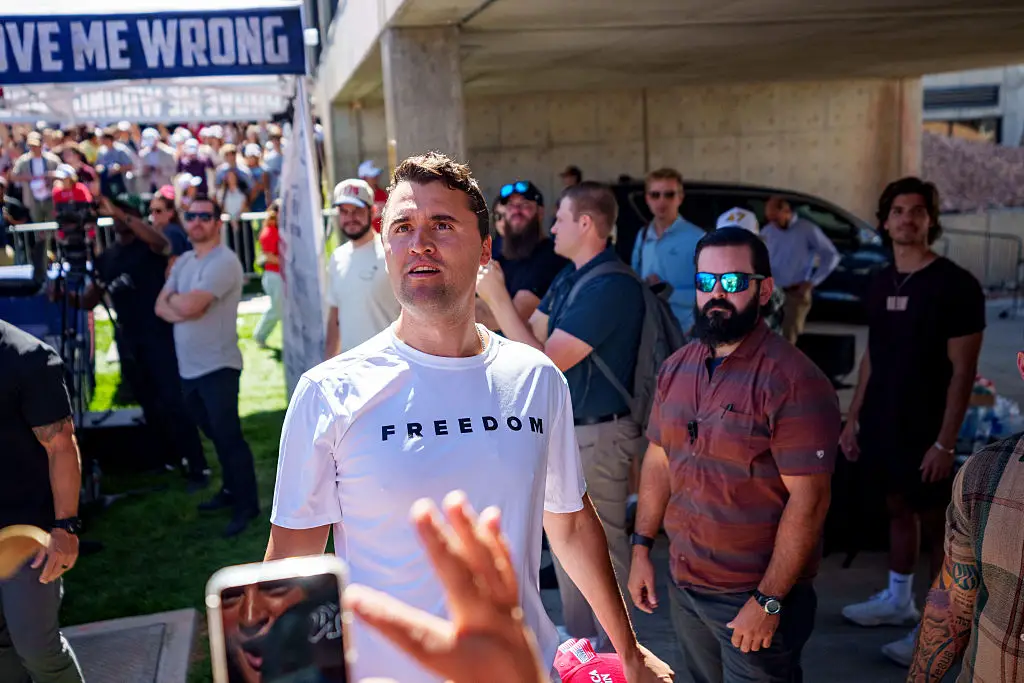
Charlie Kirk, the 31-year-old co-founder of Turning Point USA and conservative commentator, was shot in the neck and killed while speaking at a debate at Utah Valley University on September 10.
Eyewitnesses described a chaotic scene as the crowd of around 3,000 people panicked, with many dropping to the ground before fleeing.
Disturbing footage shows Kirk flinching in his seat just before the shot, and he was rushed to a hospital where he later died.
The tragedy has sent shockwaves through the political and social media communities.
While official reports call Kirk’s passing a tragedy, his death has left many questions in its wake. Rumors suggest that the way his last hours unfolded doesn’t fully make sense.
Reportedly a doctor has came forward and shared footage of the ER where Charlie Kirk took his last breath. It’s a video that’s both tense and unnerving, capturing the chaos of screaming voices, beeping monitors, and machines working hard to keep him alive.
In the madness, Kirk appears to focus on something beyond simply survival; perhaps attempting to communicate his own message in death. Witnesses describe it as haunting. “It was more than a guy dying,” one of them said. “It was like he had this knowledge or something that just needed to come out before he couldn’t say it anymore.”
The leaked footage, which has since been deleted, raises more questions than answers about Charlie Kirk’s assassination.
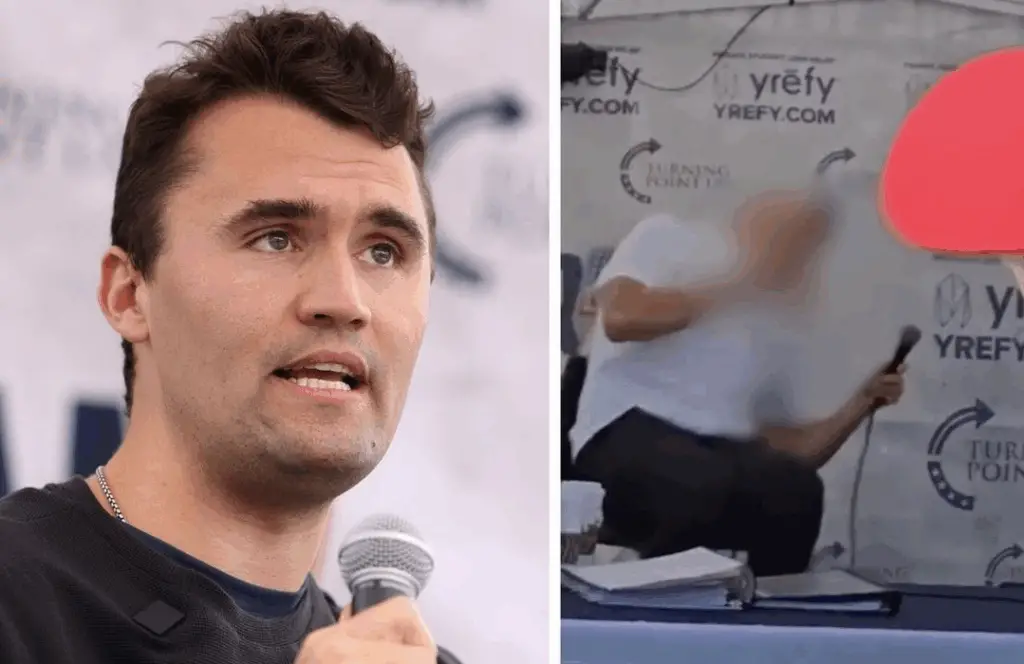
The doctor who leaked the footage remains anonymous, but their act is being called courageous. In a statement, they allegedly wrote, “The public deserves to see. They deserve to know. This was not just a medical event—it was history, and history should not be hidden.”
The video leaves no doubt about Kirk’s fragility in his final moments. It also forces questions about what is kept from the public.
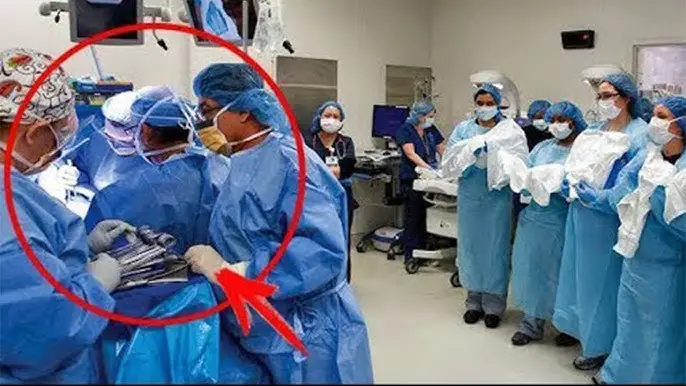
The real truth may never be known, but the silence is broken. For a brief, haunting moment, the world saw Kirk struggling to say something—and finally, people are listening.
Please SHARE this article with your family and friends on Facebook.
Bored Daddy
Love and Peace
Sad News About Michael J. Fox
Don’t make me the story,” Michael J. Fox insists, both gentle and firm. “The story is the power of optimism. It’s a choice. Acceptance doesn’t mean giving up; it means looking at the truth and asking: ‘What does this truth require of me?’” After more than three decades of living with Parkinson’s disease, the 62-year-old actor still frames his life around that philosophy: facing pain without letting it define him.
From Teen Heartthrob to Cultural Icon

Born in Canada, Fox quit school early and moved to Los Angeles, eventually landing the role of Alex P. Keaton on the hit sitcom
Family Ties. His career exploded with Back to the Future, making him an international sensation. By the summer of 1985, Fox had the No. 1 movie (Back to the Future
), the No. 2 (Teen Wolf), and one of the top-rated TV shows at the same time.
Fox fell into drinking until Pollan confronted him about raising children with an alcoholic. He sobered up, built a career around
Spin City, and in 1998 went public with his diagnosis. Two years later, he founded the Michael J. Fox Foundation for Parkinson’s Research, which has since poured billions into medical science.
No Glossing Over: Honesty and Humor
In the documentary Still: A Michael J. Fox Movie, Fox allowed cameras to capture his tremors, falls, and even flashes of humor in the middle of hardship. There was no sugarcoating, but no self-pity either. “Do I feel sad seeing myself young and athletic? No. Do I sometimes change the channel? Yes,” he says.
He admired Muhammad Ali, who shared the same illness, for carrying public attention lightly. Ali could rewatch old fights with pride, and Fox does the same with his acting. “People sometimes come up and say: ‘Thanks for my childhood.’ I can’t take credit for their childhood, but I understand the connection.”
Fox also laughs at himself. On Curb Your Enthusiasm, he played a fictionalized version of himself—sometimes exaggerating symptoms to irritate Larry David. For Fox, self-deprecation is a way to resist being boxed into pity.
“I Hate It. It Sucks. But It Didn’t Defeat Me”

Fox is candid about the toll of Parkinson’s: constant pain, endless effort to move, and the exhaustion of daily life. “It’s tough to get up in the morning and keep going,” he admits. “I hate it. It sucks. But it didn’t defeat me.”
Optimism for him isn’t blind cheerfulness but discipline. He refuses to live the worst-case scenario twice—once in imagination, and again in reality. Instead, he focuses on what can be done today: showing up for family, funding research, and finding humor in small moments.
Science Pushing Forward
The Michael J. Fox Foundation doesn’t just fund “safe bets.” It takes risks. The group has invested heavily in:
-
Biomarkers: Identifying the disease before symptoms appear. By the time Fox’s finger twitched, 75% of dopamine cells were already gone. Earlier detection could open doors for preventive treatments.
-
Deep Brain Stimulation (DBS): A proven therapy for many patients, though Fox himself isn’t an ideal candidate due to an unrelated spinal tumor.
-
Cutting-edge therapies: From gene and protein therapies to drugs targeting misfolded proteins, the foundation is chasing every promising lead.
Fox cautiously predicts that within 10–15 years, medicine may achieve a breakthrough—whether through prevention or a partial cure. “Will I be around for that? Probably not,” he says with a smile. “But it’s not about me. The moment is coming. Big answers are near.”
Beyond Hero Worship or Pity
Fox rejects both extremes: being seen as a saint and being pitied as a victim. Pity, he says, is “a benign form of abuse.” Instead, he wants people to see him fully—flawed, funny, struggling, and still hopeful. That honesty allows him to shape his own narrative rather than being trapped by others’ expectations.
Family as Anchor
His wife Tracy and their children remain his grounding force. Sobriety, honesty, and perseverance came not from celebrity status but from his commitment to family life. “I have a beautiful family,” he says simply. “That’s what keeps me going.”
From Hollywood Stardom to Scientific Impact

The irony of Fox’s journey is that he never set out to change the world. He wanted fame, success, and cars. Parkinson’s turned him into an activist who has reshaped the landscape of neuroscience funding. His foundation is now the leading force behind Parkinson’s research worldwide.
Living Under Public Gaze
As a star, Fox has always been watched. As a patient, he lives under an even sharper gaze. “They’re not dealing with me. They’re dealing with who they see me be,” he reflects. His answer is transparency and humor—letting people see both the struggles and the jokes.
Politics, Truth, and Optimism

Fox also links his philosophy to broader issues. He believes truth must counter misinformation, and optimism must resist cynicism. “If you obsess over the worst and it happens, you’ve lived it twice. I don’t want that. I want to live day by day.”
Waiting for the Final Scene
“I’m staying for the final scene. I’m not leaving early to beat the traffic,” Fox says. For him, the future always exists—until it doesn’t. What matters is being present, pushing for solutions, and cherishing family and community.
His legacy now stretches beyond movies. It includes both the joy he brought audiences and the research advances that could change millions of lives. If Parkinson’s one day becomes preventable or curable, Michael J. Fox’s fingerprints will be on that history.
Conclusion
Michael J. Fox refuses pity and resists sainthood. He acknowledges pain but insists on optimism. He faces Parkinson’s honestly, funds science boldly, and cherishes family fiercely. His story is not just about loss, but about resilience and purpose.
“I hate it. It sucks. But it didn’t defeat me.” That’s the essence of Fox’s philosophy: life may be unpredictable, but optimism is always a choice.
BREAKING: FBI Director Kash Patel Goes Scorched Earth on Adam Schiff
FBI Director Kash Patel stood firm against relentless Democratic attacks during congressional hearings this week, defending the integrity of the bureau while exposing the partisan theatrics of Senators and Representatives obsessed with political theater. Democrats pressed him on the handling of the Jeffrey Epstein case and the recent assassination of conservative activist Charlie Kirk, but Patel remained unshaken, emphasizing law, evidence, and accountability over political grandstanding.
During the House Judiciary Committee hearing on September 17, 2025, Representative Jamie Raskin (D-MD) accused Patel of withholding critical information on Epstein. Patel firmly rejected the charge, stating, “I’m not going to break the law to satisfy your curiosity.” He made clear that the FBI had released all documents allowed by law, insisting that further disclosures required judicial approval.

Representative Eric Swalwell (D-CA) tried to twist Patel’s refusal into an implication of guilt, claiming it showed a “consciousness of guilt.” Patel called out the baseless accusation, replying bluntly, “bulls**t,” leaving Democrats sputtering and highlighting the hollowness of their attacks.
In the Senate Judiciary Committee the day before, Senator Cory Booker (D-NJ) accused Patel of weakening national security. Patel countered, asserting, “Booker’s rant of false information does not bring this country together. It’s my time, not yours.” When Booker cried, “My God! My God!” the spectacle only underscored the Democrats’ desperation.
FBI Director Kash Patel stood firm against relentless Democratic attacks during congressional hearings this week, defending the integrity of the bureau while exposing the partisan theatrics of Senators and Representatives obsessed with political theater. Democrats pressed him on the handling of the Jeffrey Epstein case and the recent assassination of conservative activist Charlie Kirk, but Patel remained unshaken, emphasizing law, evidence, and accountability over political grandstanding.
During the House Judiciary Committee hearing on September 17, 2025, Representative Jamie Raskin (D-MD) accused Patel of withholding critical information on Epstein. Patel firmly rejected the charge, stating, “I’m not going to break the law to satisfy your curiosity.” He made clear that the FBI had released all documents allowed by law, insisting that further disclosures required judicial approval.
Representative Eric Swalwell (D-CA) tried to twist Patel’s refusal into an implication of guilt, claiming it showed a “consciousness of guilt.” Patel called out the baseless accusation, replying bluntly, “bulls**t,” leaving Democrats sputtering and highlighting the hollowness of their attacks.
In the Senate Judiciary Committee the day before, Senator Cory Booker (D-NJ) accused Patel of weakening national security. Patel countered, asserting, “Booker’s rant of false information does not bring this country together. It’s my time, not yours.” When Booker cried, “My God! My God!” the spectacle only underscored the Democrats’ desperation.
Senator Adam Schiff (D-CA) tried to intimidate Patel over the handling of Ghislaine Maxwell’s prison transfer. Patel called him a “political buffoon,” exposing Schiff’s theatrics and partisan obsession. When Schiff suggested undue influence, Patel stood firm, refusing to bow to baseless insinuations.
Patel’s hearings made it clear that Democrats were more interested in political attacks than justice. He repeatedly defended the FBI’s swift response in the Charlie Kirk assassination, noting that a suspect was apprehended within 36 hours. “Our agents acted decisively and within legal bounds,” he said. “The safety of American citizens is our top priority, not political theater.”
When Democrats tried to accuse the FBI of selectively releasing documents to shield political allies, Patel hit back. “I do not engage in cover-ups, and I will not tolerate baseless attacks on my integrity or the FBI’s mission,” he said, demonstrating unshakable resolve in the face of partisan pressure.
Booker suggested political bias affected investigations, but Patel dismissed the claim: “Senator Booker, your accusations are unfounded. Our focus is law enforcement, not politics.”
Schiff attempted to leverage Epstein’s connections to attack Patel personally. Patel responded, “We follow evidence, not rumors. Allegations are not facts. The FBI releases what the law allows and protects citizens’ rights in the process.”
Patel also called out Democrats for their melodrama. “This is about public safety, not spectacle,” he said. “The American people deserve accountability, not a partisan circus.”
Representative Raskin tried to paint Patel as part of a systemic problem within the FBI, but Patel pointed to arrests and prosecutions as proof of results. “Results speak louder than accusations,” he said. “We enforce the law impartially.”
He addressed media spin, noting, “Much of what is being reported is sensationalized. My responsibility is to the law and the truth, not to narratives spun for political gain.”
Conservative outlets hailed Patel’s forthrightness. Fox News noted his “commitment to transparency and law enforcement integrity,” highlighting that Democrats’ attacks were politically motivated.
The New York Post highlighted Patel’s calm but firm approach under pressure, quoting him: “I don’t give a damn about criticism that isn’t rooted in fact. My duty is to enforce the law.”
Critics focused on moments of visible frustration, but Patel’s sharp rebuttals exposed the Democrats’ hollow accusations and their failure to understand law enforcement priorities.
Patel also addressed allegations of politically motivated firings within the FBI. Former agents accused him of retribution, but Patel confirmed that all personnel actions were based on legal procedure and performance metrics.
He defended the FBI’s communication strategy, stating, “We cannot compromise ongoing cases for political theater,” emphasizing the agency’s commitment to law over politics.
On the Kirk investigation, Patel stressed professionalism and methodical procedures. “The suspect’s quick apprehension reflects rigorous investigative work, not political expediency.”
The hearings underscored the partisan divide: Democrats attacked reflexively, while Republicans emphasized law, order, and results.
Patel noted that under his leadership, the FBI increased transparency where legally permissible, improving public reporting without compromising confidentiality.
When Swalwell tried to insinuate favoritism, Patel said, “Every decision is evidence-based. Politics has no role in law enforcement decisions.”
The hearings drew massive public attention. Patel’s firm stance became a symbol of principled law enforcement resisting political intimidation.
Critics accused him of politicizing the bureau, yet Patel made clear that partisan attacks would not distract him from enforcing the law.
Conservative voices praised Patel’s assertiveness, signaling that the FBI under his guidance will prioritize law and order, not partisan politics.
The Epstein case remained a focal point. Patel reiterated, “We have released more than any prior administration,” showing the Democrats’ claims were baseless.
Regarding Charlie Kirk’s assassination, Patel emphasized the FBI’s rapid and professional response, countering criticism with facts.
Michael J. Fox reflects 30 years after Parkinson’s diagnosis: “I still am Mr. Optimist”

“We didn’t know what to expect. We didn’t know what would happen. We didn’t know. You know, no one could say when it would have more effects. More symptoms than what I had, which was a twitch, twitching pinkie,” said Fox. “But they [doctors] just said it was coming.”
Fox didn’t reveal his Parkinson’s diagnosis to the public for another seven years. It is a progressive brain disorder that over time, for many, will slowly strip away a person’s movement and speech and while scientists have made significant strides with research and treatment, there is still no cure.
More than two decades later and after several acting jobs that allowed him to work without hiding his condition, the 60-year-old is now retired from acting.
The award-winning actor is also an accomplished author. He has written four best-selling books — the latest, a memoir, “No Time Like the Future: An Optimist Considers Mortality,” just came out in paperback. He’s also the face of the Michael J. Fox Foundation for Parkinson’s research.
Fox said he struggles with some of life’s basic day-to-day functions, including going out to dinner with his family, but he is also appreciative of the moments he gets to spend with his loved ones.
“I have a wheelchair that I use every now and then and it still sucks. I have a hard time getting to a restaurant and up the stairs to where my family’s eating perhaps at a dinner. But then I’m there with my son and my three daughters and my wife, and friends of ours. And it’s just like, that’s great,” Fox said.
While he is aware of the hurdles that lie ahead, he’s wise enough to understand what he can control and what he can’t.
“I thought, ‘Who am I to tell people, cheer up? Who am I to tell people it’s gonna be okay? Who am I to tell people ‘Have a positive attitude,” Fox said. “You really got to go to that and check that place and say, ‘Is that just something I say? Or is that something I believe?’ If it’s something I believe, is it something I can live? And if I can live it, is it fair for me to ask others or suggest to others, or prescribe that others look at it the same way?”
Fox said living with Parkinson’s is a “heavy thing” but he remains optimistic.
“And I really felt I just felt so much weight of that public persona being Mr. Optimist. And I still am Mr. Optimist. And I knew and in some small way, I knew in that moment, as dark as it was, that I would get back to that at some point,” he said.
